
Running for Office?

Campaign Printing For Candidates
Nobody hands a first-time candidate a list of what to print. So here it is. Find your race below, see exactly what to order and roughly how many, and get union printed materials with the union bug on every piece — shipped in 5 business days. Whether it’s your first school committee run or a contested congressional race, you order from the same shop.
FIND YOUR RACE > SELECT ONE
What does your race actually need?
The honest answer changes enormously between a school committee seat and a congressional race — and most printers will happily sell you the wrong quantity of the right thing. Open your contest below. Quantities assume a real voter contact plan, not a district population, because print you never distribute is budget you set on fire.
Turnout is low, the electorate is small, and personal contact decides it. You need to be visible in the right neighborhoods and to have something in your hand at every door and every coffee. This is the race where over-ordering hurts most, because unused signs come out of your own pocket.
YARD SIGNS
100-250
Order to confirmed placements only.
Add ~15% for replacements.
PALM CARDS
500-1,000
One per door you plan to knock, plus events and coffees.
DOOR HANGERS
250-1,000
Most doors don’t answer. This is what you leave.
LAPEL STICKERS
250-500
Volunteers identifiable at
the door and
at the polls.
Skip for now: direct mail and rally signs. At this scale your volunteers can physically reach the whole universe, so mail is money spent to do what walking already does.
Your universe is now larger than one person can walk, so the job shifts from personal contact to organized field. You need enough material for a volunteer program to run repeat passes, and enough street visibility that your name registers before anyone knocks.
YARD SIGNS
250-500
Cluster in high-traffic corridors, not evenly across the ward.
PALM CARDS
2,500-5,000
Two passes over your targeted walk universe.
DOOR HANGERS
2,500-5,000
One per targeted household, plus a GOTV drop.
LAPEL STICKERS
500-1,000
Field team plus supporters on Election Day.
BUMPER STICKERS
250-500
Committed supporters carry your name daily.
Add if you have the budget: a single direct mail drop to your persuasion universe in the final three weeks. Below roughly 5,000 households, walking is still cheaper than mailing.
The first race where you cannot reach everyone by hand no matter how good your volunteers are. Print splits into two jobs: material for the field program, and mail for the households the field will never get to. You also start needing event presence.
YARD SIGNS
500-1,000
Placement discipline matters more than count.
PALM CARDS
5,000-15,000
Multiple passes over your persuasion universe.
DOOR HANGERS
5,000-15,000
Split across a persuasion drop and a GOTV drop.
DIRECT MAIL
2-3 drops
Reaches the households your volunteers can’t walk.
RALLY SIGNS
100-300
Events, announcements, and press availability.
LAPEL STICKERS
1,000-2,500
Field program plus Election Day poll coverage.
This is the scale where campaign print bundles start paying for themselves — one order locks production slots for the whole cycle instead of re-entering the queue every three weeks.
Mail becomes the primary voter contact channel and print becomes a logistics problem as much as a creative one. Your orders now need to be planned against production capacity, not just budget, because everything you need in the last three weeks is what every other campaign in the state needs too.
YARD SIGNS
1,000-2,500
Plus large-format placements at key intersections.
DIRECT MAIL
4-5 drops
Persuasion, early voting, absentee chase, GOTV.
DOOR HANGERS
15,000-40,000
Targeted to high-propensity precincts only.
PALM CARDS
20,000+
Field program running at full volunteer capacity.
RALLY SIGNS
300-1,000
Multiple events, surrogate visits, Election Day.
APPAREL & PROMO
As needed
Staff, volunteers, and supporter merchandise.
At this volume, use the quote form rather than the storefront. A campaign specialist will price the full cycle at once, which is almost always cheaper than five separate orders.
At federal and statewide scale, print is bought against a media calendar and a compliance process, not off a menu. Volume pricing, production scheduling, drop-ship logistics, and disclaimer review all matter more than any single unit price. You are not shopping — you are procuring.
DIRECT MAIL
5+ drops
Deeper postal entry to control in-home dates.
YARD SIGNS
2500+
Distributed through county and regional offices.
RALLY SIGNS
1500+
Camera-facing signage for every event and surrogate.
CUSTOM PORTAL
Recommended
Field offices order approved pieces within your rules.
Multi-office campaigns should ask about a branded ordering portal early. It lets regional staff order what they need without every request routing through headquarters, while you keep control of templates, brand standards, and spend.
You are not selling a person, you are selling a yes or a no — which changes the print entirely. Name recognition matters less; explanation matters more. Your pieces need room to make an argument, and your disclaimer requirements are usually different from that of a candidate committee.
DIRECT MAIL
2-4 drops
Larger formats — issue arguments need space.
DOOR HANGERS
Scaled to universe
Larger sizes carry the explanation.
YARD SIGNS
Scaled to universe
Question number and a one-word ask. Nothing more.
LAPEL STICKERS
Scaled to universe
Coalition partners and volunteer identification.
Union locals, labor councils, and advocacy coalitions order here regularly. If your coalition includes labor partners, the union bug is not optional — and it is available on every piece at no charge.
CANDIDATE QUESTIONNAIRE > TAKES 30 SECONDS! PROMISE.
Not Sure Which of Those is You? Answer Six Simple Questions.
Tell us what office you’re running for and roughly where your race stands, and we’ll come back with the products that fit — sized to your race, not to a catalogue. It takes about thirty seconds, and it’s the fastest way to get a real answer instead of a price list. Every campaign that reaches a specialist starts here.
Candidate Questionnaire
Our Questionnaire will help us find the best product for you in under 30 seconds!
CAMPAIGN MATERIALS > WHAT EVERY CANDIDATE ORDERS
The Seven Pieces Almost Every Campaign Prints
Different races need different quantities, but the pieces themselves barely change from a school committee run to a congressional race. Here’s what each one is actually for, and when in the cycle it earns its place.
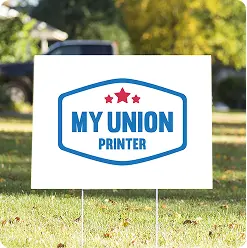
POLITICAL YARD SIGNS
Name recognition at street level. The first thing most candidates order and the piece voters see most often.
ORDER FIRST • WEEK 1

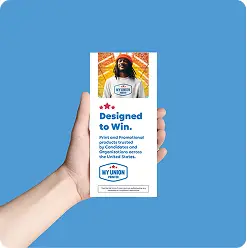
CAMPAIGN PALM CARDS
What you hand a voter who opened the door or came to an event. Your whole case on one card.
BEFORE FIRST CANVASS
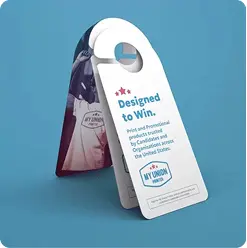
CAMPAIGN DOOR HANGERS
What you leave when nobody answers — which is most doors. Stays visible until they come home.
BEFORE FIRST CANVASS
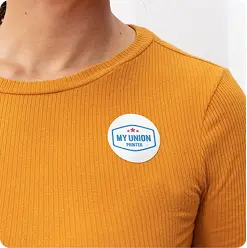
CAMPAIGN LAPEL STICKERS
Makes your volunteers identifiable at the door and turns supporters visible at the polls.
BEFORE FIRST CANVASS
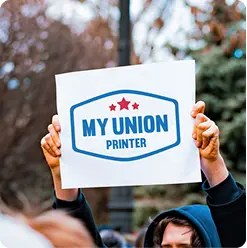
POLITICAL RALLY SIGNS
Camera-ready signage for announcements, events, and Election Day. What ends up in the news photo.
BEFORE YOUR FIRST EVENT
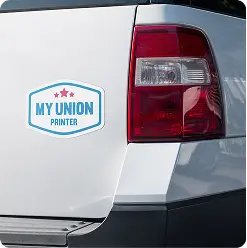
POLITICAL BUMPER STICKERS
Committed supporters carry your name through the district every day for the rest of the cycle.
ONCE YOU HAVE SUPPORTERS
POLITICAL DIRECT MAIL
Reaches every targeted household with no volunteers required. Scales past what your field can walk.
WHEN UNIVERSE VOLUNTEERS
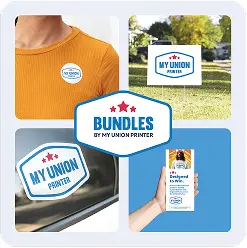
CAMPAIGN PRINT BUNDLES
All of the above on one order, with production slots locked for the full cycle instead of the queue.
BEST VALUE • ORDER ONCE
ORDER EARLY, NOT OFTEN
The Most Expensive Mistake is Ordering Late
Production is 5 business days from artwork approval, plus shipping. That’s rarely the problem. The problem is that every campaign in your state needs print in the same final three weeks, and slots fill. Here’s the shape of a cycle — the Campaign Calendar has the full detail.
120+ DAYS OUT
LAUNCH KIT Yard signs, palm cards, lapel stickers. You need something in hand the day you announce, and signs go up the week you have your first supporters.
60-90 DAYS OUT
FIELD BUILD Door hangers and your palm card reorder as the canvass ramps. Rally signs before your first real event. This is when your volunteer program starts consuming material fast.
30-45 DAYS OUT
PERSUASION Direct mail persuasion drops and your early voting pieces. Order your GOTV run now, at the same time — not later, when everyone else is ordering theirs.
10-14 DAYS OUT
GOTV The final drop has to already be in hand. Anything ordered inside this window is a gamble on shipping, and shipping does not care about your election.
THE UNION BUG
Always Print the Union Bug.
If you’re seeking a labor endorsement — or already hold one — your materials get looked at. Union locals and labor councils notice a missing bug quickly, and it’s an unforced error that costs a candidate credibility they spent months earning. Every product we print is available with the union bug at no surcharge and no minimum order, added at checkout. Three union print companies stand behind it, and everything is made in the USA by union craftsmen.


SELECTED WORK > 20 YEARS EXPERIENCE
Campaigns we’ve printed for
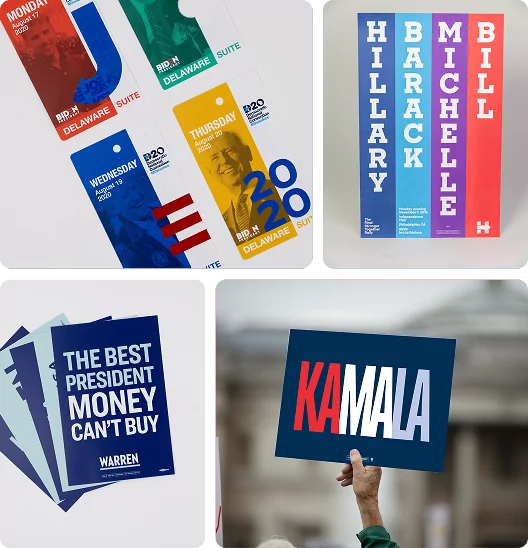
Committees, consultants, unions, and candidates from school committee through statewide office. Materials produced for the Healey campaign, shown below, are representative of the range a full statewide program covers.
FIRST-TIME CANDIDATES
Is this your first race?
Start here.
Almost every race starts with the same four: yard signs for street-level name recognition, palm cards for face-to-face voter contact, door hangers for the households where nobody answers, and lapel stickers so your volunteers are identifiable. Add rally signs once you’re holding events, bumper stickers once you have committed supporters, and direct mail once your universe is larger than your volunteers can walk. Open your race in Section A for quantities.
Order to confirmed placements, not to district size — a sign in a yard nobody offered is a sign in a garage. School committee and small local races typically start at 100 to 250. City council and ward races run 250 to 500. State representative races run 500 to 1,000. Whatever your number, add roughly 15 percent for replacements, because signs get damaged, stolen, and moved, and running out in week three is worse than over-ordering by fifty.
Order the first run as soon as you have a logo and a ballot-qualified name. Production is 5 business days from artwork approval, plus shipping — but the real constraint isn’t our turnaround, it’s the calendar. Every campaign in your state orders in the same final three weeks, so late orders compete for the same production slots. Order your GOTV run at the same time as your first run and the problem disappears. The Campaign Calendar maps it out.
If you’re seeking or hold a labor endorsement, yes. Union locals and labor councils check, and materials printed without a bug get noticed quickly — it’s an unforced error that costs credibility you spent months earning. The union bug is available on every product we print, with no surcharge and no minimum order, and it’s added at checkout. If your artwork is already designed, we place it for you.
Print is usually one of the smaller lines in a local campaign budget and one of the most visible, which makes it easy to under-think in both directions. The honest framing: quantity drives your total far more than unit price does, and unit price drops sharply as quantity rises. Decide your voter contact plan first, size the order to that plan, and check current pricing on each product page. For anything at volume, the quote form will get you a real number.
Roughly 85 to 90 percent of campaigns upload finished artwork and check out in minutes. If you don’t have files, our in-house design teams build print-ready artwork — a single yard sign through a full campaign identity package — with revision cycles paced for campaign deadlines rather than agency ones. If you’re building files yourself, the Campaign Print Guide has specifications for every product.
Palm cards are what you hand to a voter who opened the door or came to an event. Door hangers are what you leave when nobody answers — which is most doors, most of the time. A canvassing shift needs both, because your volunteer can’t predict which house will be home, and sending them out with only one means half their doors get nothing.
Yes, and this is where most campaigns save real time. Your artwork stays on file in your store account — log in, find the order, click Reorder Design, adjust the quantity, check out. Reorders ship in the same 5-business-day window as new orders, with no re-uploading. The Campaign Reordering Guide walks through it if you haven’t used the flow before.
QUICK LINKS